
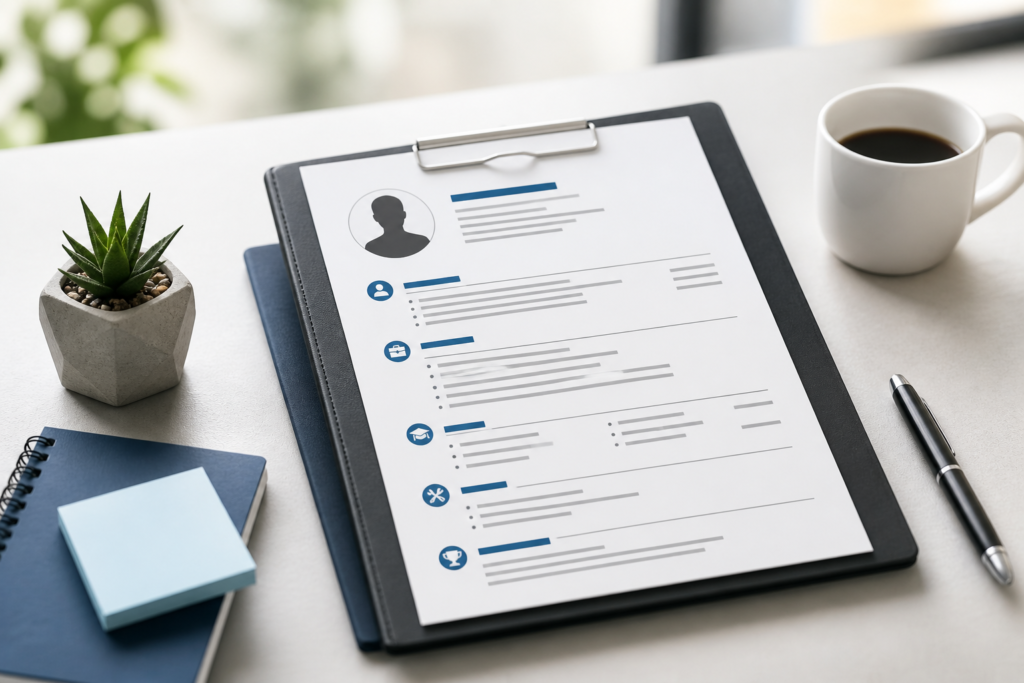
Introduction
In today’s job market, a resume is more than just a document—it’s your first impression, personal brand, and ticket to interviews.
Yet most job seekers still use outdated formats that don’t pass modern hiring systems.
Here’s how to create a resume that actually gets results.
1. Start With a Strong Professional Summary
Your resume should begin with a short summary that highlights:
- Your role or expertise
- Years of experience
- Key strengths
Example:
“Detail-oriented IT Support Specialist with 3+ years of experience resolving technical issues, managing ticketing systems, and improving user satisfaction.”
2. Focus on Achievements, Not Responsibilities
Hiring managers care about results.
Instead of listing tasks, show impact.
❌ “Handled customer queries”
✅ “Resolved 40+ customer queries daily with a 95% satisfaction rate”
3. Use Keywords From the Job Description
Most companies use ATS (Applicant Tracking Systems).
If your resume doesn’t include relevant keywords, it may be rejected automatically.
👉 Tip: Copy important keywords from the job posting and naturally include them in your resume.
4. Keep the Format Clean and Professional
Avoid:
- Graphics
- Tables
- Fancy fonts
Use:
- Clear headings
- Bullet points
- Simple formatting
5. Keep It Short and Relevant
- 1 page (for freshers)
- 1–2 pages (for experienced candidates)
Remove outdated or irrelevant experience.
Conclusion
A strong resume is not about listing everything—it’s about presenting the right information in the right way.
If done correctly, it can significantly increase your chances of getting interviews.